*You’re reading Be Kind, Rewind, where we review movies from the 60s to 90s weekly. If there is a movie you would like us to review, you can send a letter to the editor under the “More” section of the website.
“The Sound of Music” is an American musical drama film directed by Robert Wise, also known for “West Side Story.” Produced by 20th Century Fox, and released in the United States on March 2, 1965, it takes place in 1930’s Salzburg, Austria. The movie is based on the history of The Von Trapp Family Singers, who fled Austria to escape from the Nazi Regime during the early years of World War II.
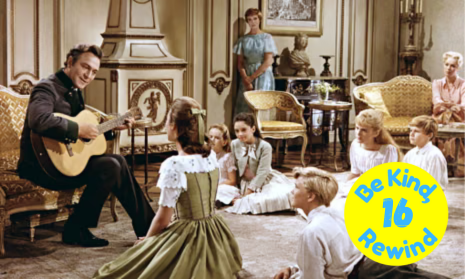
This film follows Maria Kutschera (Julie Andrews), a nun in training who was hired as a governess to seven children, while deciding whether or not to go back to the abbey or not. The children, Liesl, Friedrich, Louisa, Kurt, Brigitta, Marta, and Gretl test Kutschera with tricks the moment she steps inside their house. It is revealed the children have scared away many governess’ before. Their father, Captain Georg von Trapp (Christopher Plummer) is a naval officer.
In the film, the children have traits or things they think describe themselves. Liesl (Charmain Carr) doesn’t need a governess, Friedrich (Nicholas Hammond) is impossible. Louisa (Heather Menzies) pretends to be Brigitta (Angela Cartwright), Kutschera catches on and Brigitta calls her smart, then insults her dress.
Kurt (Duane Chase) is incorrigible. While the younger girls do not tell Kutschera what they or their peers think of them, Marta (Debbie Turner) is going to be seven on Tuesday and wants a pink parasol. Gretl (Kym Karath) stomps her foot instead of talking. Kutschera assures her she knows who she is.
Later on in the movie, Kutschera and Captain von Trapp get married after she returns to the abbey and Mother Abbess convinces her to go back and express her feelings for the Captain.
Von Trapp is portrayed as a cold, strict father who doesn’t like music because he is grieving his late wife and associates her death with music, up until the second act. However the historical Captain was a gentle, warmhearted father who loved music.
The actual von Trapp children were upset with the way the movie portrayed him. While the children had said that he used a whistle for distinctive sound, he never made them march to attention like he did in the film.
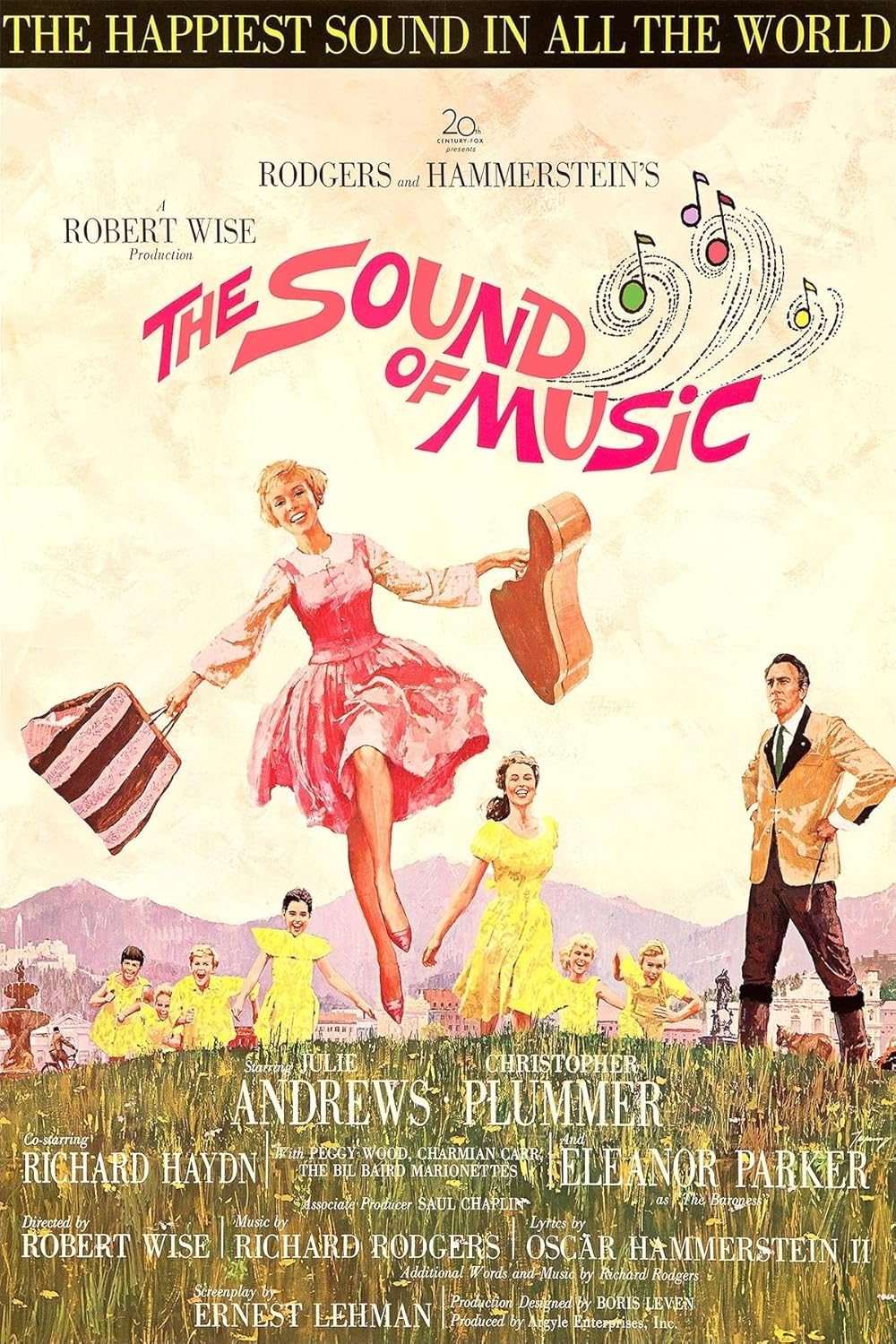
The soundtrack for this movie was written by Richard Rodgers and Oscar Hammerstein ll. The music and the arrangement was by Irwin Kostal. Two new songs named “I Have Confidence” and “Something Good” were written by Rodgers after Hammerstein died in 1960.
The most memorable song from this film is “Do-Re-Mi” which is the song Maria von Trapp (née Kutschera) sings and teaches to the children to introduce them to music. This song is also from one of the most recognizable scenes where the children and von Trapp are having a picnic at Gschwantanger meadow.
“The Sound of Music” was amazing, it spent forty-three weeks in the number one place at the US box office. By 1966 The Sound of Music was the highest-grossing film, with $67.5 million worldwide rentals. It surpassed “Gone With The Wind,” which held the record for twenty-four years.
It is a good movie for children, as the rating is General Audiences, however some of the themes are better understood as an adult. While the younger children in the film do not get many lines and are forgetful due to lack of screen time, the music and dialogue convey the story beautifully. I would rate this movie a 4.54 📼 out of 5.00📼 and recommend “The Sound of Music” to anyone who loves musicals, drama, blooming romance, but also older movies.