During the 2025 Winter Olympics in Milano Cortina, Italy, there were a wide variety of feats pulled off by athletes on both ice and snow. Weeks before, event preppers prepared by setting up boundaries, stadiums, and shipping in 1.75 million cubic meters of artificial snow. Climate change is thought to be the underlying cause of this issue for countries all across the globe.
“Even when I went skiing, they had to bring in tons of artificial snow and that’s not normal,” Olympic College Professor Amy Lawrence said. “We are starting to see less snow pack in Kitsap, increased drought severity, [and] longer periods without rain.”
While some people may chalk up these things to an isolated incident, years of pollution and industrialization say otherwise, according to The National Library of Medicine. Unfortunately, Italy’s failure to provide the right conditions to host the Olympic Games are one of the many examples of what happens when countries don’t take the initiative to put measures in place to sustain the environment.
“When I was in…high school, all my teachers would say, in the future there would be consequences for all the CO2 emissions that we’re putting in the atmosphere, but the reality is, we’re seeing it in real time,” AP Environmental teacher Alec Stvartak said. “We are seeing more hurricanes, more intense wild fires and water quality issues, all of these issues are tied to environmental climate change.”
The effects of climate change have been studied by scientists all over the world, according to the National Oceanic and Atmospheric Association. Throughout different regions of the world, temperatures rise and fall, killing off species that are vital to sustaining the environment. In the near future, the many vital ecosystems will be affected as a result of severe changes to temperature, rain levels, and the habitat they live in.
“Instead of prioritizing dealing with climate change, you’re seeing a lot of countries remove themselves from things like The Paris Climate Agreement,” Stvartak said. “Unfortunately, I think that’s just ignoring the consequences of climate change.”
According to the United Nation Climate Change Association, the Paris Climate agreement is a legally binding treaty signed by 195 parties with “the overarching goal to hold the increase of two degrees celsius above pre-industrial levels.” The arctic is twice as vulnerable as any other environment, due to how easily ice caps that are already on land can melt into the ocean, causing the sea level to consequentially rise.
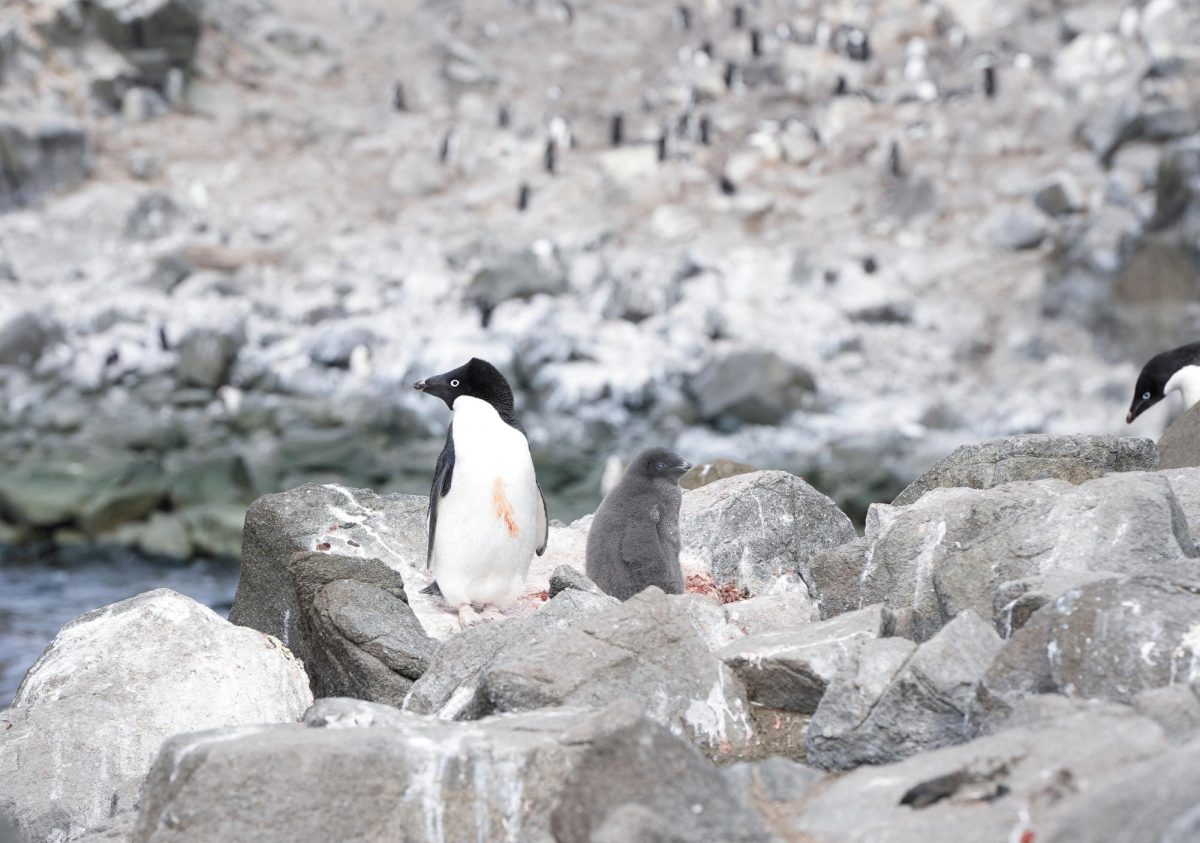
“The ice in Antarctica, which is having some significant glacial reduction problems, is going to be added to the sea level,” environmental science teacher Andy Campbell said. “And when you warm up water, it expands and takes up more space, and that’s where our problem is going to be.”

As sea levels continue to rise and the numbers of previously thriving species fall, the future of the globe’s climate is shrouded with uncertainty. The world has quite a disreputable track record of pollution dating back to the industrial revolution, making a change in the environment proves to be a very difficult task. There are, however, ways the younger generation can help reduce the severity of the impacts as a result.
“We all have a role to play, of course, but one of those roles is being an educated voter and making sure that you’re informed on the decision making of our politicians and policy,” Stvartak said. “Paying attention to your elected officials’ policy changes that they’re making and their effect on the environment.”
As important as it is to pay close attention to policies put into place by politicians, it can also be important to watch the effect companies have. Complacent companies are often responsible for overusing and exploiting natural resources for their own benefit. According to the United Nation Environment Programme, companies that utilize data centers are another contributing factor to this global issue. Companies that own data centers dump electronic waste like mercury and lead, substances that are known to be hazardous and cause brain damage, according to the National Library of Medicine.
“We should be shutting down our dirty energy as fast as possible and switching over 100 percent to renewables,” Campbell said. “We need to be leaving coal in the ground instead of digging it up.”