Central Kitsap High School offers various art classes such as pottery, studio art, and AP design, all taught by Morgan Young. Students typically take the prerequisite class, beginning pottery, before entering the advanced pottery class.
“If someone already has pottery experience, I can let them go straight into [the] advanced pottery [class] which is significantly more challenging,” Young said. “So it’s important to have evidence of their experience.”
In beginner’s pottery, students start out with the fundamentals, like simple hand-making and using small tools to sculpt details and build pots and bowls. Through experience, students learn the three basic building methods of pinch pots, slab pots, and coil pots.
“Pottery class is a fun and creative environment to express myself but in handmaking, sometimes the pieces just don’t work out as you expect them to, which can be frustrating,” pottery student Joseph Ortega said.

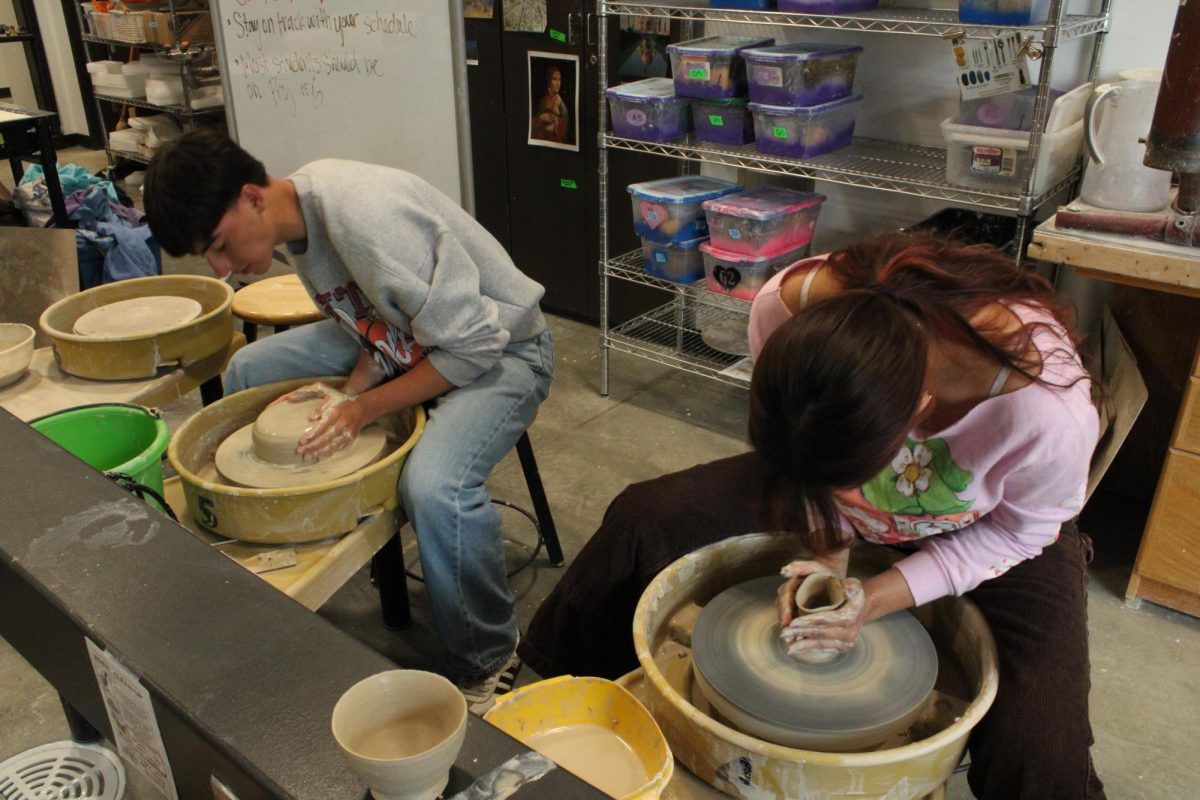
In advanced pottery, students focus on more complex forms of pottery, such as glazing techniques, challenging hand building, and using the pottery wheel to make functional tableware. Learning new things comes with its own challenges, especially in pottery, because sometimes the clay doesn’t mold in its desired shape or it doesn’t hold. It’s all about gaining experience and improving.
“Recently, I had a coil building project that I worked on for two weeks,” Ortega said. “I came back one weekend and it had fallen apart. It was hard for me to move on from two weeks of work but I eventually did. Now, I’m rebuilding it.”
In pottery, there’s many things to remember in order to successfully handcraft. For example, when throwing clay on the wheel, the clay has to be properly hydrated. Once the clay reaches a bone-dry state, it becomes fragile and brittle making it difficult to shape.
“Learning how to take care of your pieces is really important,” Ortega said. “There’s a good zone where you can work with them, which is called plastic. If it gets out of that zone, to bone-dry, you won’t be able to work with the clay anymore.”

In Young’s art classes, self reflection is something students work on. While students review their finished work, they start reflecting on how well they followed instructions and how they showed effort, growth, and creativity. Art is a way to build from your mistakes and build skills you can use outside of art class.
“I think it’s important for students to think about how much care and effort they put in and the way they grew from their mistakes,” Young said. “Those are skills you need in the future, regardless of whether you’re doing art or not.”