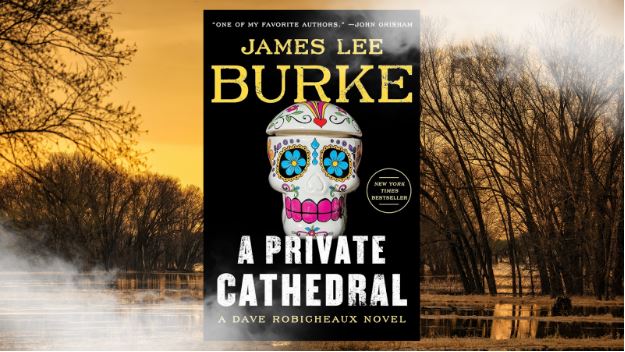
James Lee Burke’s “A Private Cathedral” is a lush and eerie novel that takes the Dave Robicheaux series into a bold, dreamlike territory. While Burke has long been celebrated for blending crime fiction with philosophical insight, this installment pushes further than any before, introducing elements of myth, time distortion, and gothic surrealism. Set on the Louisiana coast, the story unfolds like a fever dream where past and present collide, while love becomes both salvation and destruction.
Dave Robicheaux enters the novel as a weary, aging detective burdened by addiction and a lifelong sensitivity to injustice. The story becomes less about solving a crime and more about forcing Robicheaux to confront the moral wounds left by history, both personal and collective. When he is drawn into a violent feud between two criminal families and the doomed romance of Johnny Shondell and Isolde Balangie, reality itself begins to fracture around him.
The arrival of Gideon Richetti (a supernatural, time-rending assassin) would feel outlandish in another crime novel, but here it becomes an extension of Burke’s long standing fascination with trauma and the ghosts that follow us. Robicheaux’s encounter with Richetti, marked by visions, temporal dislocation, and an odd awareness of past crimes, function less as a spectacle and more as a metaphor. The otherworldly elements represent history’s grip, reinforcing the idea that violence never really dies but merely changes form.
Burke’s incantatory style transforms the Louisiana coast into a living force, shaping every emotion and conflict until the landscape becomes a cathedral itself. Robicheaux struggles to protect the young lovers from rival crime families, inherited vendettas, along with the inevitable violence, while battling his own alcoholism and grief. Yet even amid the darkness, the book shows tenderness through Robicheaux’s compassion, moments of reflection, and Burke’s reverent attention to love and loss.
The “romantic tragedy” at the heart of the novel refers to the doomed relationship between Johnny Shondell and Isolde Balangie, whose love is crushed by the violent criminal legacies they inherit. Rather than distracting from the story, the paranormal elements heighten the emotional stakes, framing their fate as part of a larger mythic cycle. Richetti, the time-twisted figure who stalks Robicheaux, becomes the symbol of generational violence, also known as the accumulated brutality of centuries to haunt both individuals and countries alike.
In the end, “A Private Cathedral” is one of James Lee Burke’s most daring and emotionally resonant novels, elevating crime fiction through myth, memory, and the occult. By allowing reality and dream to blur, Burke reveals truths about love, violence, and human longing that a traditional detective novel would never reach. For longtime fans and new readers alike, the book stands as a testament to Burke’s enduring ability to reinvent himself and make the crime genre into something much more strange.