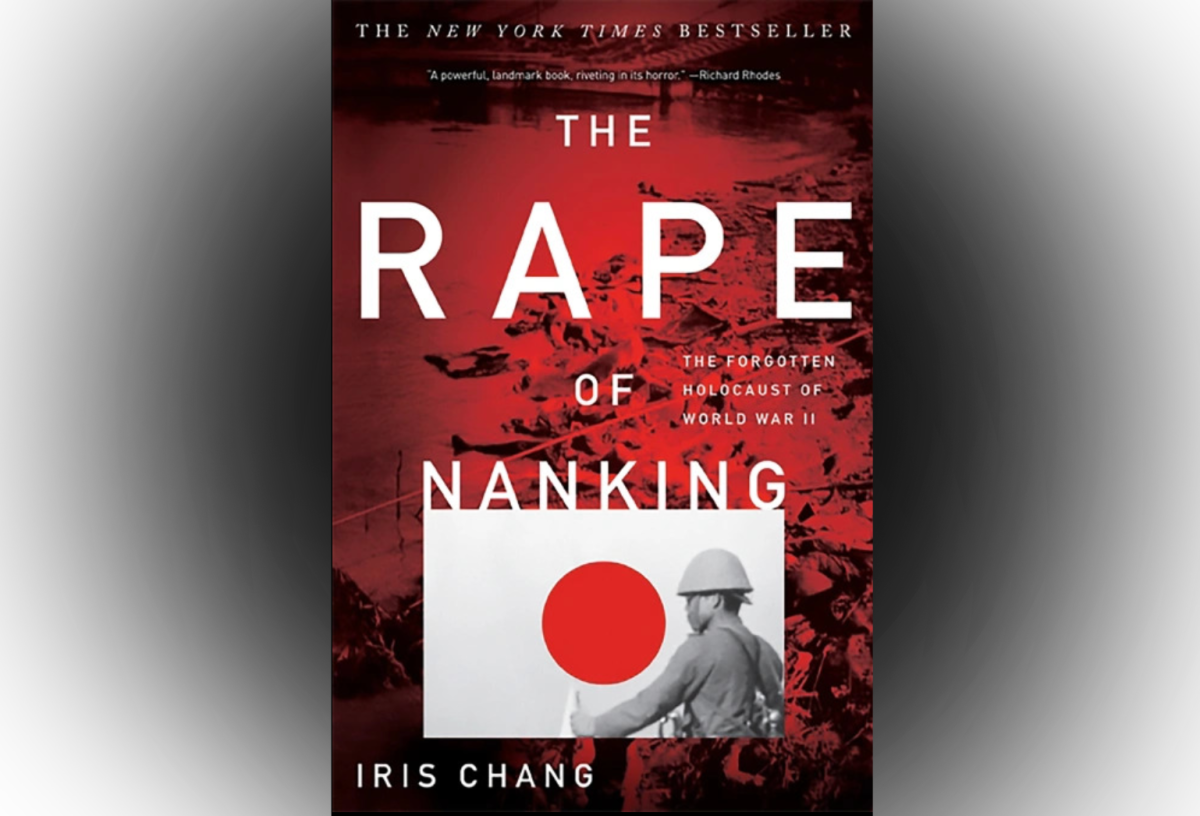
Historical events, such as the Nanjing Massacre, must be remembered and acknowledged because as Spanish philosopher George Santayana said, “Those who cannot remember the past are condemned to repeat it.” When young author Iris Chang heard the horrors of the Sino-Japanese War from her Chinese immigrant parents, she went to her local libraries to find out more, finding no information. She wondered why she couldn’t find anything on one of the worst episodes in human history, and this ultimately sparked her research and writing of the Nanjing Massacre.
“The Rape of Nanking” thoroughly explains the events that took place during the mass rape and murder of Chinese civilians as well as the prisoners of war during the attempt by the Imperial Japanese Army to take over China. The death casualties ranged from 260,000 to 350,000, far exceeding the death toll of the American air raids on Tokyo and the atomic bombs at Hiroshima and Nagasaki combined.
This book is exceptionally well written and researched, with Chang including aspects of the Chinese, Japanese Army, what went on during the overtaking of Nanking, and the war crimes committed by the Japanese during WWII. Reading this book will give a full understanding of what happened during the war.
On top of explaining the abuse the Japanese Army committed, Chang includes the personal stories of the Chinese people who endured the war. One person that primarily stood out was the story of Li Xuying, who at the time, was a pregnant 18-year-old woman who fought off three-armed Japanese soldiers and escaped to the Nanking Safety Zone. By adding in Xuying’s story, Chang displays the courage of Chinese citizens who fought back, even in helpless situations.
When it came to writing about the Nanking Safety Zone committee, Chang meticulously researched what happened to them after the war by contacting family members and reading old newspapers. One of which being John Rabe, a Nazi party leader who helped shelter approximately 250,000 Chinese citizens. Chang contacted Rabe’s granddaughter to find out how his life played out, as she did with the other Safety Zone leaders.
Reading about a Nazi party leader who helped save Chinese citizens is surprising and ironic considering the Holocaust, so it’s important to acknowledge Rabe’s background as well as his intentions. Rabe, although German, lived in China for many years since he worked for Siemens China Corporation. When the Japanese Imperial Army came marching into Nanjing, Rabe couldn’t just flee the country that had welcomed him with open arms, so he decided to join the 22 foreigners who established the Nanking Safety Zone.
After the massacre, Rabe brought back many sources of the Japanese atrocities in hopes of asking Hitler to use his influence to stop further violence. Rabe also held lectures and presentations in Berlin, showcasing films and photographs of the Nanjing massacre. Soon, Rabe was detained by the Gestapo and was told not to lecture about the topic again.
In no way shape or form is this book talking about a Nazi party leader in a positive light, nor trying to justify anything that happened during the Holocaust, but Rabe’s work in China was very honorable considering he saved many Chinese lives.
Although the “Rape of Nanking” is well constructed, it has received a ton of criticism for having comparative victimology. Chang describes the genocide as a “forgotten Holocaust” which suggests the Nanjing Massacre was worse than Hitler’s persecution towards non-Aryan people. No genocide should be compared, no matter the severity, and each event should be remembered as its own tragedy.
This book is extremely informative; however, it contains a lot of graphic and inhumane content such as rape, human disembowelment, and brutal ways of death and abuse. This book is recommended to anyone who has an interest in history or someone who wants to learn more about WWII, especially since the Nanjing massacre isn’t widely talked about.