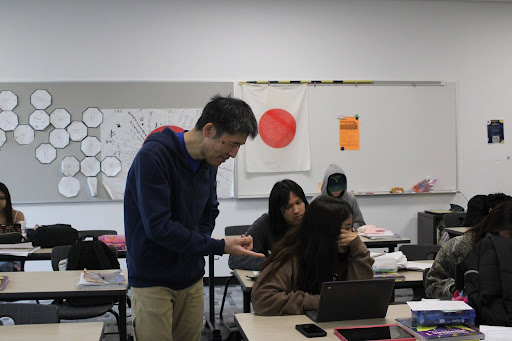

In Chris Mygatt’s freshman ELA classroom, filled with laughter and chatter, is a learning environment suitable for kids who want their voice heard. To get a deeper understanding of the classroom book, “Dear Martin” which tackles the sensitive topics of racism and stereotypes, Mygatt conducts class discussions to further analyze the struggles of racial inequality in the US.
“I like the diversity of opinion in our class discussions and making sure everyone gets a voice,” Mygatt said. “Sometimes, I wish to see more thoughts, depth, and examples.”
Students try their best to contribute to class discussions but there are times when students stumble on their thoughts and they’re in need of guidance to share their thought process out to the group. In situations like this, Mygatt or assistant teacher Leah Sanders, helps students guide their ideas.
“You have your own group of people and a person guiding you, such as a teacher or assistant, helping you along with questions and add-ons to your thoughts,” CKHS freshman Madison Gates said.
During class discussions, not all students might have the courage to speak up. When you have a class full of teenagers, it might take time for all students to participate, because a part of doing class discussions is improving speaking skills, and that’s the learning experience of it.

“As the class got to know each other more, the kids began to trust each other, which led the kids to open up to get a good depth of detail and thinking,” Mygatt said.
To increase class discussion participation between students, encouragement is needed for students to speak up. Mygatt tries to make the material that students are learning more engaging so that they can improve their confidence and speaking skills.
“I think kids are more invested in the material when it’s interesting and relevant to their lives,” Mygatt said.
With new thoughts and ideas being shared among students, it makes them question and rethink about what they thought before and after the discussion. Especially with books, which often have hidden meanings and foreshadowing, it is good to think profoundly about the events.
“We should do a lot more discussions to share more ideas and information,” Gates said. “The more we discuss, the more advanced our thoughts become on how we see the story.”
In class discussions, there are instances where there is a lack of conversation, but this can be avoided when students get encouragement and guidance from the teacher. The teacher is who really needs to participate so that class discussions can happen smoothly.
“The teacher has to manage the class well in order for the classroom discussions to be effective,” Mygatt said.
Instead of students sitting in their own thoughts with questions in mind, talking through their wonders and curiosities to a group of people with different wired-minds will give them new perspectives on the story.
“Class discussions definitely belong in a classroom setting, because you don’t really have anywhere else to discuss ideas and questions openly and freely,” Gates said.