
Coffee Oasis Drop-in Centers Revitalizing Community One Teenager at a Time


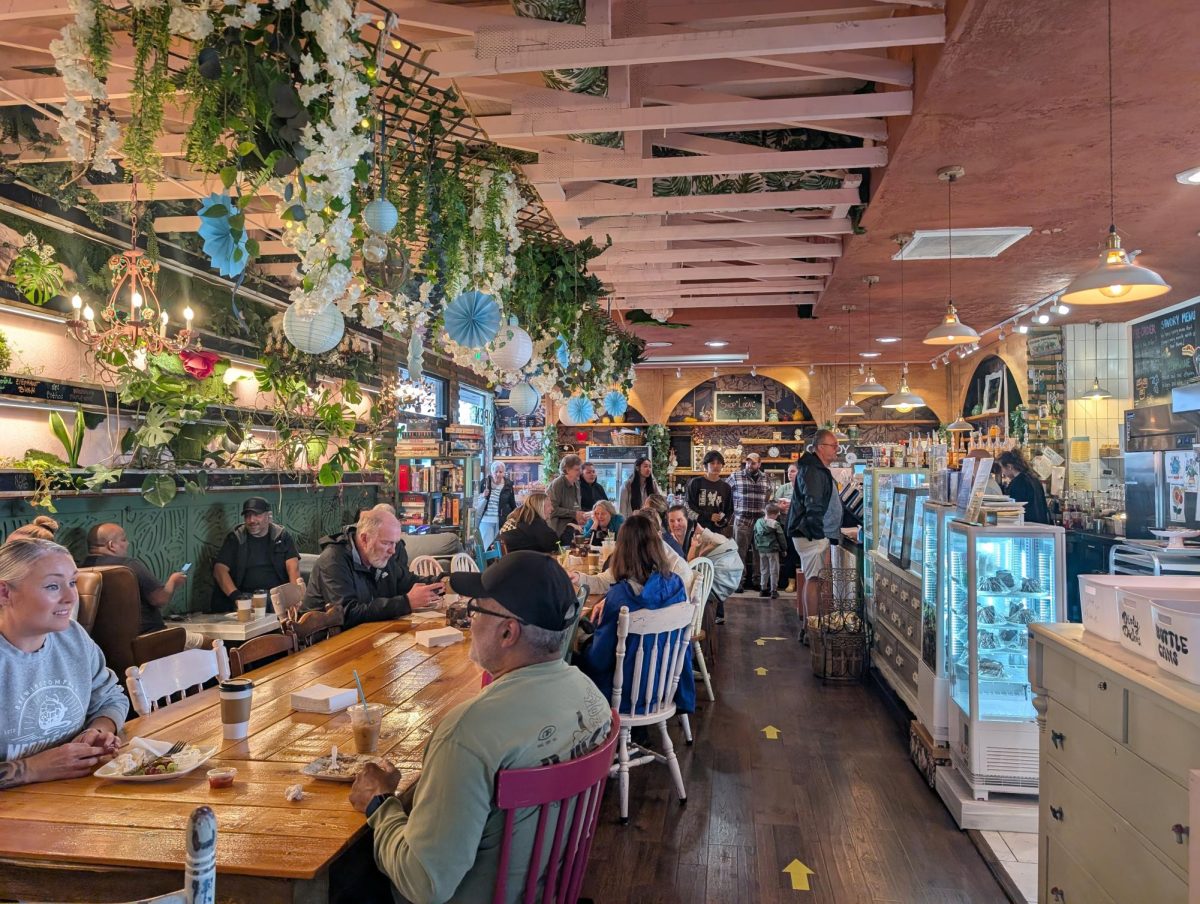
Pursuing the scent trail of freshly roasted coffee beans, lively banter of customers, and into a gaily painted two-story complex on 822 Burwell St, is a quaint coffee brewery. Up the stairs, behind the roastery, is the Bremerton Drop-in Center for youth ages 13-25, where hot meals and exciting activities are frequent for any visitor. Staff and volunteers warmly greet newcomers, eager for the chance to get to know new people.
“I’ve worked here for 16 years, and when I started, I was a Drop-in Center supervisor,” Kitsap Area Director of Youth Programs Jacob Wischoff said. “I was the very first for the Bremerton location, and then I was here as we expanded into the other locations.”
The original Coffee Oasis was founded by Dave and Cindy Frederick, who received a “calling” to aid people in need of shelter. The couple, at the time, onboarded many foster care children in their home, but eventually relocated to the Bremerton Drop-in Center in 1997. To establish support in other locations, Coffee Oasis branched out to six additional sites in Washington, including Port Orchard, Poulsbo, and Tacoma.
“On average, there’s about 40,000 homeless youth in Washington state at any given time,” Community Development Manager Cody Clark said. “There are about seven shelters that are specifically for youth in the state, so there just needs to be more resources.”
Volunteers and staff, similar to Clark, stress how critical youth-specific shelters are for adolescents experiencing complicated, often multi-layered situations such as homelessness. Considerable amounts of youth don’t receive the support required to exit such circumstances, but Coffee Oasis is endeavoring to accommodate as many youth as feasible. The program prompts adolescents to have abilities vital for performing well at a job, providing healthy life skills, maintaining a listening ear, and working towards permanent housing.
“A lot of times, people fizzle out, or they do not maintain what it takes to continue doing whatever that is,” Wischoff said. “It might be a period of many different jobs, because no one was there to say, ‘yeah, I understand that’s hard, but let me help you through that hard thing.’”
Wischoff wants long-struggling individuals to gradually become independent and overcome difficulties they may face with help from the shelter staff. He has encountered a few former residents of the Drop-in Center years later, some of whom appear to harbor a profound gratitude for his service and the bond he maintained with them throughout their struggles.
“[The youth shelter] was great support, especially with all the people that were working at Coffee Oasis,” a visitor at the Drop-in Center who wished to remain anonymous said.

Coffee Oasis has reportedly benefited numerous residents’, visitors’, and staff’s lives. There have been 2,332 youth discovering a community within the Drop-in Centers, and 770 youth that the crisis outreach staff members recommended to the program and shelter. One visitor noted they were provided with three weeks’ worth of a temporary hotel stay until they were able to find permanent lodging.
“Not to mention, more or less, they saved me when I was homeless at the age of 18,” The visitor said.
Many of the youth who arrive at the shelter rarely leave without having made a positive transition. A plethora of volunteers pitch in to create a secure atmosphere for teens enrolled in the shelter. Coffee Oasis provides a quiet, yet lighthearted space for youth to learn, socialize, and have fun.
“There are plenty of social opportunities,” Wischoff said. “[The youth] could come in and play board games, video games, and talk with the staff who are working. [They’re] encouraged, [and they] have a web of support that is developed.”
Amongst all of the activities, visitors are especially drawn to the foosball table, noted by one of the staff members. Many visit the Drop-in-Center to simply hang out with each other, or to get things off their chests. Adolescents are thoroughly enabled to speak their minds, but also to minister empathy to one another with regard for all’s feelings.
“Everyone needs to be treated with respect,” Wischoff said. “Everyone needs to be able to say what they think without fear of rejection or feeling funny.”
Coffee Oasis also ensures multiple anti-discrimination policies, so no matter the ethnicity, background, religion, race, or gender, all are welcome. They stress that, despite being a Christian-based organization, they do not mandate anyone to practice their beliefs.
“There’s [like] an 80% chance that a youth, if they are homeless, is a part of the LGBTQ+ community,” Clark said. “We serve the LGBTQ+ community the same way we serve anyone else. We make sure they feel loved and cared for.”
The organization also holds many events to provide attentive consideration, specific to each individual. On Christmas, Coffee Oasis encourages staff to select a gift to give to each resident, mainly to raise enthusiasm in an often convoluted juncture of the year, but also to remind the teenagers they are still loved. The staff also rewards accomplishments with recognition and praise, as an incentive to continue endeavoring.
“In the middle of May, we do an event called the ‘Celebration of Youth Achievement,’” Wischoff said. “Where we celebrate all the achievements youth have gotten this year, whether that’s through this company or even personally.”

During the celebration, the teens in the shelter have the opportunity to win awards based on the major goals that they have achieved. Examples of achievements that have got recognition include employment, obtaining a car, a house, or even just a driver’s permit. To the team, even seemingly minor advancements indicate that a situation is improving and worthy of encouragement.
“We celebrated 75 or 80 youth last year in Port Orchard with certificates like that,” Wischoff said. “Out of all of them, 40 of them had gotten jobs.”
Sometimes the staff doesn’t realize how significant of an experience the shelter provides. Others working for the same cause all feel relatively alike — they don’t just participate in their profession to feel accomplished, but to extend their hand, as they simply deem it natural to do so.
“I didn’t realize when I first came into the work how much of an impact I was,” Wischoff said. “It felt like it was really normal, just living a normal life, and helping people make normal decisions.”
Your donation will support the student journalists of Central Kitsap High School and help us cover our annual website hosting costs.