Around Kitsap County, a variety of adolescents ages five to 18 are involved with 4-H, the largest national youth organization whose focus is to teach developmental skills through targeted hands-on learning. Within the local organization is around 22 clubs regarding topics such as animals, engineering, leadership, and health.
“…A lot of people tend to think of 4-H as plows, cows, and sows because that’s where its roots kind of lie, within agriculture and home ec[onomics],” Kitsap County 4-H program coordinator Elisabeth Nilsson said. “Nowadays, it has also branched off into coding, technology, art, and public speaking, so it really is a very diverse program in the aspect of, if it interests you, we can find a way to make it into a program for you.”
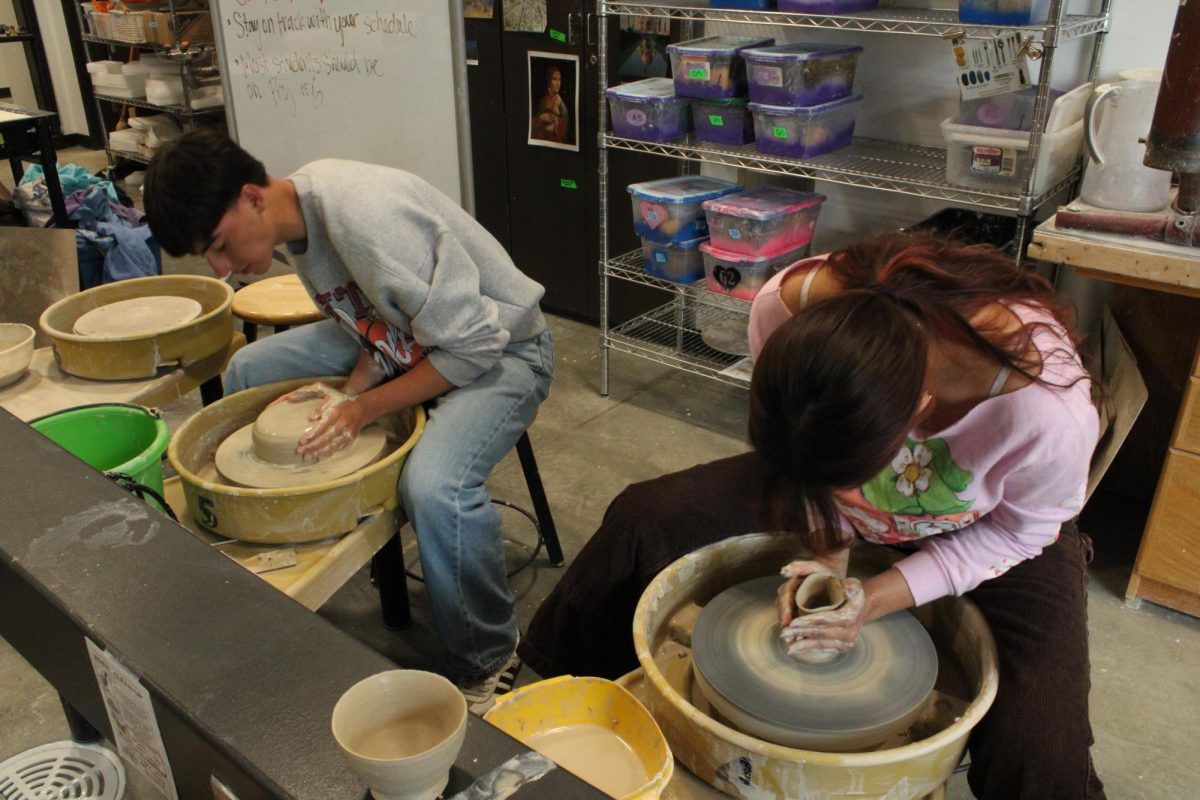
After paying the yearly $50 entry fee, children pick a club which fits their interests, where they’re able to narrow their scope on a specific project. For some, this may look like learning how to raise livestock, sew outfits, or do photography.
When the 4-H season starts on Oct. 1, youth get 11 months to learn new skills and experiment in their area of interest till their break in September. Throughout the season, club leaders guide children by helping them set goals and find their passion, allowing youth to take control of their learning. While support is present for kids to fall back on, the style of teaching is hands-off, letting children work through their problems to come up with their own solutions.
“…One of the great things about 4-H is it’s an amazing place to fail, because the whole concept of 4-H is called learn, do, apply,” Nilsson said. “…That’s part of the whole experiential education side, is that it’s not an adult standing at the front of the class telling you what you have to do, it’s you doing it and figuring out, ‘Okay why didn’t that work? Why didn’t that turn out the way I wanted?’”
When it comes to the educational aspect of the organization, 4-H focuses on tailoring the program to each member, preparing them for adulthood in ways relating specifically to kids and their desired project. Within the program, 4-H members are taught overarching skills like budgeting, as it’s an inevitable aspect of life that applies to most projects youth choose to do.
“…We teach them how to track what they’re spending and if they end up selling something, what they make off of it,” Nilsson said. “…‘Okay, if it costs you $50 a month to feed these chickens, and you’re going to have them until August, then you need to be budgeting x number for x number of months. What about betting? What about all the other potential expenses?”
With each club running differently, all adhere to required aspects of the national organization, as they teach skills that promote development among children. For one, most youth involved are required to partake in community service, with hours varying for kids depending on age. This involvement, designed with the intent of teaching children to give back to their community, is built in the hopes of instilling the idea that in order to have an impact on it, youth must first be part of it.
On top of that, oral reasoning activities are done to help youth articulate and argue their point of view, showing them the importance of having evidence to back up their claims.
“At fair, we’ve done it with things as simple as, you take four pencils and you lay them out and ask the kids, ‘Which is the best pencil?’” Nilsson said. “There is really no right or wrong, but it’s the ‘Okay, why do you think that one is the best?’ …So it could be, ‘Well, that one isn’t sharpened, and that one doesn’t have an eraser, that one is really small, but the fourth one’s been chewed on. So, I’m going to go with the small one that has an eraser, is sharpened, and hasn’t been chewed on.’”
While not required for all children, as it’s dependent on their age and project, most are required to partake in some form of public speaking. For youth, these presentations allow them to share information about their project in a formal manner, helping to instill confidence when speaking in front of an audience.
“I used to be a really shy kid and didn’t want to talk to literally anyone,” President of The Cat Tales Club Edie Kavanaugh said. “I have now learned the courage to talk in front of a lot of people. In the meetings, I’m out there making jokes, I’m having fun. It’s going to definitely help me with college and talking to people and lots of things in life. Leadership is very important.”
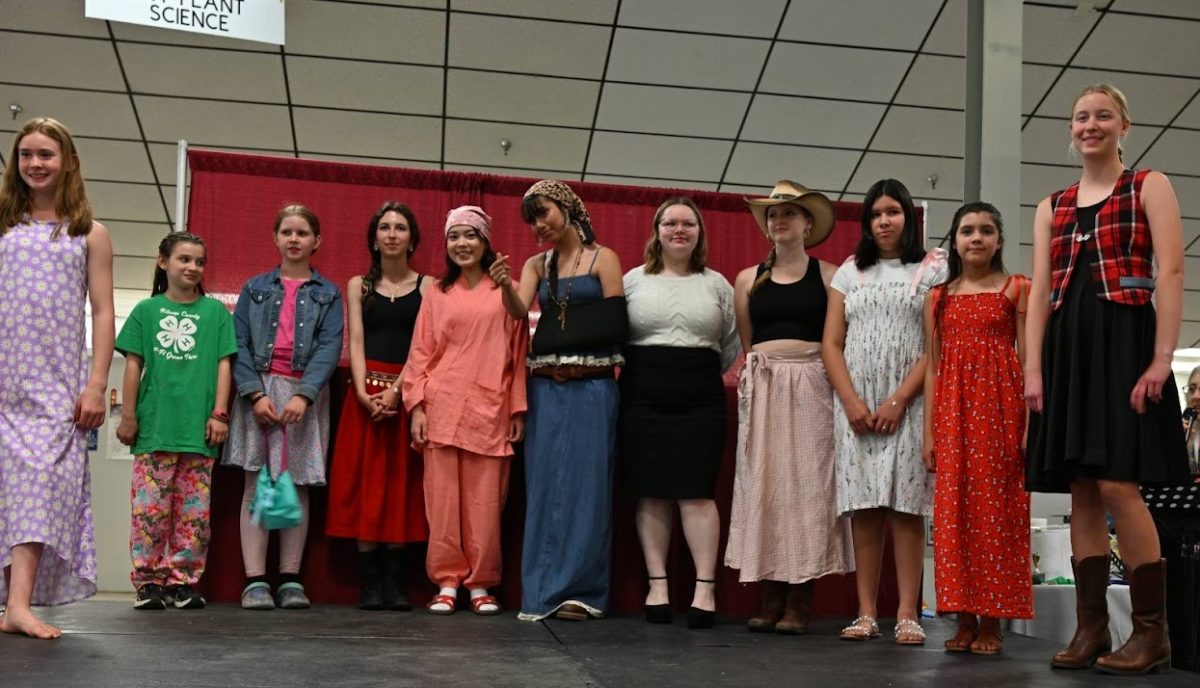
In late August, the annual Kitsap Fair and Stampede is hosted at the fairgrounds in Bremerton, an event most 4-H members participate in. At the fair, a variety of competitions are hosted, including on-site animal shows, archery, and sewing, giving kids the opportunity to present their skills and abilities in their field of interest, while getting the chance to win awards for it.
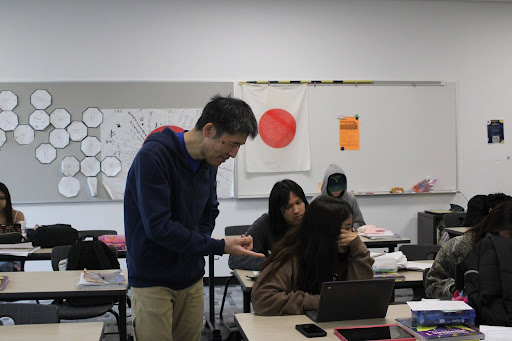
“It’s really nice because I get recognition for my hard work sewing the garment,” Sewcial Club member Kiana Roth said. “And also, I really like showcasing outfits, like Japanese outfits, especially because I can share my culture with everyone.”
Though the county fair is a large event for 4-Hers to partake in, it’s not the main aspect of the program, as that’s the skills kids take away from their experiences. Through the opportunities provided by volunteers, children get to start adulthood with their foot in the door, making their way into the world with independence, problem solving, and financial prudence.
“4H provides the opportunity to learn about millions of things,” Kavanaugh said. “We have so many different clubs from cats all the way up to cooking and sewing. …We have everything in 4H. If you ever want to learn about something, 4H is the best way to go because there’s so many people with so much knowledge.”