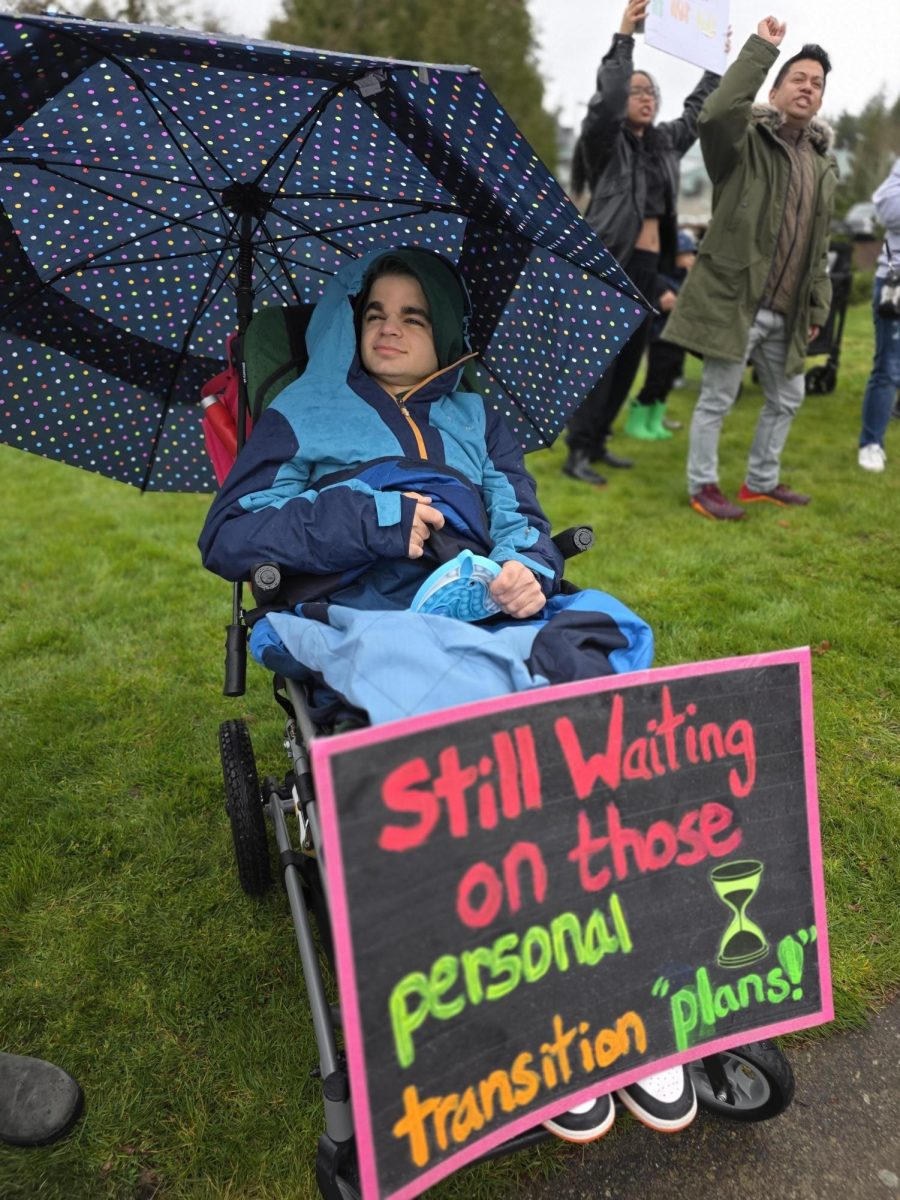


On April 24, the Pediatrics Rehabilitation Center at St. Michael Medical Center shut down indefinitely. The sudden and low notice event left many families who relied on the center for their children’s care in panic, as the center was one of very few which accepted Medicare, TriCare, and Medicaid. As these three government insurances are highly used due to Kitsap County having a heavy military presence, both military and Kitsap families were left in the dark to find care for their loved ones.
Formerly named as Harrison Hospital, St. Michael adopted its new name in June of 2020. While the hospital itself was once located as dual campuses both in Silverdale and Bremerton, its shift to an expanded singular campus on Ridgetop Boulevard kept the building in a similarly close location. This coupled with its satellite programs, the now closed rehabilitation center provided care for a wide range of patients in the area.

“Special needs kids do not take well to change in their routine and schedule, and so once they’ve built a bond with their therapist or their team that they’re working with, it’s really hard to switch that up,” parent of a patient Daleah Brown said.
Patients at St. Michael don’t only receive physical care from the staff, but also have the chance to build bonds and relationships with other patients or doctors. These relationships can make it easier for special needs children to complete therapy. These bonds and relationships then also have the chance to extend past the child, to the parent as well, which can create a more welcoming environment for everyone involved.
“They made it so that I didn’t feel alone, and I can’t even imagine parents, single moms, especially when they already feel alone,” parent of former patient Stacey Longmate said. “Now this program is done, like it’s a community, and they become kind of like your family, and they make sure that you’re okay, and they make sure that you’re just as important as your kid that’s going to therapy.”
The relationships built at St. Michael can prove to be crucial to patients who need routine to succeed. Removing this could mean a stop in progress or even regress as consistent professional care is critical to progression.
“The summer times can be really hard if you’re not in services already, because your kid won’t be getting anything, not even just like an outside clinic, but they won’t even be getting care inside the school system,” Brown said.
Due to the closeness of St. Michael, the closure of the center means that parents may have to commute over an hour just to receive care. This could cause financial concerns due to gas prices, or could be a priority concern for parents with more than one child. With the pediatric rehabilitation center closed, parents are left with no choice but to only be able to choose the most pressing matter to focus on.
“We have to go far,” Brown said. “That’s literally the only choice. At some point, we have to sacrifice our child’s best needs over our finances. The gas [price] is insane right now. I think I just paid $85 to fill up my car, and that’s hard, but I know my daughter needs these services, so I…have to do it.”
For many families of children with disabilities, a clear and direct way to get help can be imperative to the child’s life. Especially when direct care is needed, these near vicinity facilities provide a form of care that would be inaccessible from further clinics. Some families have expressed the importance of St. Michael and how their care was critical to the longevity of their child’s life.
“She [the child] ended up passing away, and her mom was saying that she would not have been able to get extra time with her daughter if it wasn’t for St. Michael,” Longmate said. “After the transplant, she would have to go to Seattle for every visit, there would have been no way that her daughter would have stayed around as long as she did.”
With the closest clinics now being up to an hour away in some cases, this leaves parents with the decision of having to prioritize the needs of one kid over the other.
“Everybody has to miss school, if this one kiddo has to drive an hour away [they can’t] because you won’t be back in time to pick up the other sibling from school,” Brown said “So there’s some kiddos that they’re not going to be able to continue services unless something else opens up back in Silverdale, or even Bremerton, anywhere closer.”
For some patients, consistency is what’s required to foster growth and progress. Now with St. Michael closing, the only option patients and parents have is to do something new, which could hinder the progress previously made in the St. Michael clinic.
“So we’re going to new places, and for these services, your child’s going on, maybe, your child has to interact, and…their therapist is touching them, their arm, and stretching them, or making them do these different activities, exercises, and that’s really hard when it’s a new face that they’re seeing,” Brown said.
The care and professionalism of the St. Michael staff had been impacting the lives of patients for years. Even when the name of the hospital used to be Harrison, the level of care remained consistent.
“It really prided in running that clinic because it was the only of its kind in like Kitsap County,” Brown said. “So I just feel like they lost that pride and they lost their humbleness. It’s just a money-hungry hospital.”
Medicaid and Medicare were a large part of helping families cover costs for St. Michael visits, but with the closure, families may have to pay out of pocket due to other clinics not accepting these insurances.
“They don’t want to be taking state funding, because Medicaid and Medicare, they don’t pay right away, is what they’re saying,” Longmate said. “Most people over here that go to that service are on state insurance, because that’s what they can afford to help their kids. So it really frosted my flakes that they, especially the CEO, just shows no regard to the families over here.”
President of the St. Michael medical center since 2021, Chad Melton, drives all operational results across all hospital facilities in the Puget Sound Market of CommonSpirit Health’s Northwest region as a representative of the Virginia Mason company. During the events of the rehabilitation center’s closure, parents requested to have a meeting with Melton and other representatives of Virginia Mason. Although prepared with questions sent ahead of time to Melton, not much was answered on the subject of the center’s reason for closing, with neither Melton or his fellow representatives having read the material given, putting little effort into the subject, mother at the meeting Darci Bassett explained.

“We wanted to have answers to all the questions that we asked and he [Chad Melton] looked us in the eye and went, ‘oh, what email? I didn’t read any email,’” Brown said. “They needed to know how much money the hospital needed and he just said, ‘oh, I was on vacation, I didn’t read it.’ So we handed over the questions on paper, and he didn’t have any answers for us. …It was honestly a complete waste of their time and our time. We left with nothing and we got no answers to anything.”
Thanks to the sudden closure of the clinic, and its little companionship to the children needing care from the facility, not only have many gone into panic, but some children who seeked care from the center have also relapsed on their progress. For those who went to the center, constant care and attention was needed to foster an improving environment. However, some are unable to reach care effectively after the closure.
“There’s so many kids that [put] need in that clinic, and now it’s not here, and I’m sure it’s not just my kiddo that’s going through a regression,” Brown said. “It’s got to be many, many hundreds of kids, so it’s sad.”
With many looking for new forms of care in the hopes to not only continue to improve their children’s conditions, but halt the chipping away of their progress, a new source of medical aid is crucial. But with the low acceptance of popular insurance coupled with the distance of these facilities, many children will be unable to receive care for long periods of time, and those who do will receive harsh hours of driving and new challenges with stranger clinics.
“It’s sad to watch your kid work their butt off and earn certain skills, just for the community to be let down in such a way,” Brown said. “It’s really hard when you take three steps back. It’s really hard to make one step forward for these kids.”