
Central Kitsap Food Bank manager, Sarah Williams, sees first-hand how many people in the community utilize their resources regarding food. As a food bank, they give donated food to those in need, and act as an outlet for those who qualify for Supplemental Nutrition Assistance Program benefits to sign up and be contacted directly from the program.
“SNAP benefits, the Supplemental Food Program, are also known as food stamps most of the time,” Williams said. “We, [the Central Kitsap Food Bank], are a liaison where we can sign people up and get their name in the system to get them started. So we do see the benefit every day for people who are facing food insecurity because food banks can’t give them all of their food, and some people need a little extra help.”
Although food banks don’t take food stamps, the lack thereof around the community has been evident. Especially being near a military town during the last government shutdown, the CK Food Bank has received those who were and were not previously reliant on SNAP.
“The cutting of SNAP benefits has affected us greatly,” Williams said. “Especially with the government funding issue, we’re seeing way more federal workers, military. Just between…September and October, we served over 20,000 more pounds of food between those two months.”
Many students at Central Kitsap High School have veteran parents and might also rely on SNAP benefits. Even more students have parents that are federal workers, who during the government shutdown, had no income for a total of 43 days.
“My family has been living on the money my dad gets for being a vet, so he’s retired and he’s unemployed right now but my mom, she’s working…for the Navy HR and she’s our main source of income, and when she was cut off, we had to ration out our money,” CKHS student who was interviewed at the request of anonymity said.
AP World History and AP Psychology teacher, Kallie Szczepanski, took notice of individual struggles during the chaos. In response, she set up a table at the front of her classroom filled with fruits, vegetables, filling carbs, and various snacks for any struggling student to grab.
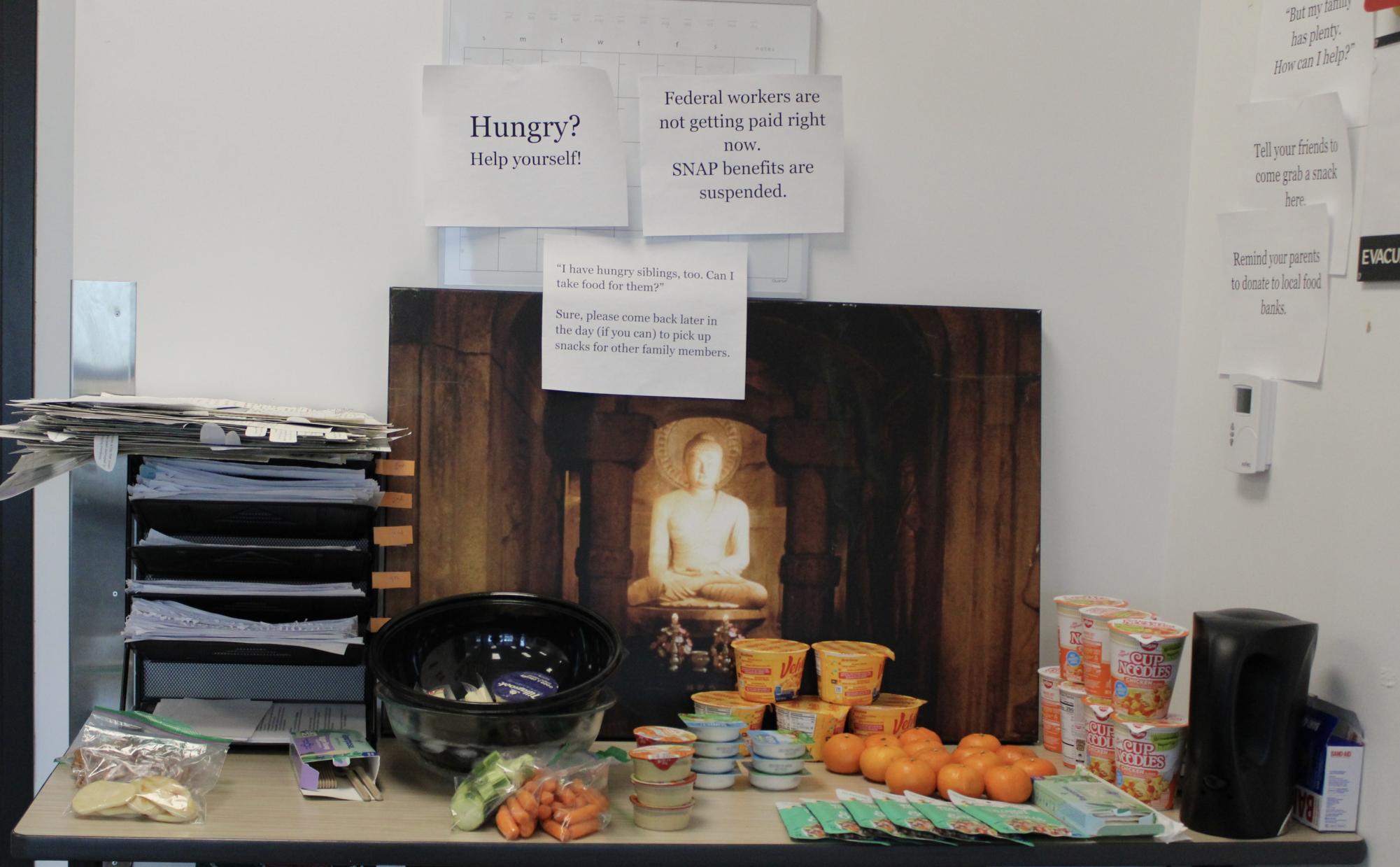
“I was just trying to think about what I could do to make a difference,” Szczepanski said. “The different food pantries in this area, I realized that they had really awkward hours, like 10 a.m. to 1 p.m.…and so I thought that would be very difficult for people who are still students or go to work or people that are disabled and can’t just go out to get food, and probably some of the kids who are at school…and so I thought I could try to bring variety of nutritious foods.”
Even with the disarray and stress being built up among families, CK Food Bank executive director, Chris Benson, has contributed and observed numerous outlets in the surrounding community that have worked hard to help those grappling with budgets and dietary needs.
“I’ve noticed that, starting last month on the social media outlets all across the board, just the community in general, restaurants were offering deals, folks are doing [food] baskets, organizations that we are partnering with are doing their own baskets,” Benson said. “So, not only are we doing baskets, but we also have other organizations that we can refer people to get a basket and additional food. So, the community has stepped up a lot.”
SNAP effects may seem immediate to many; however, more is likely to arise. As the United States has come out of the government shutdown, SNAP benefits have restarted, but the Trump administration will only pay out half of the amount people normally get from SNAP and payments will be delayed (NPR).
“This is something that’s not happening right this minute, but over the next couple of years, SNAP is supposed to take major cuts,” Szczepanski said. “And it’s just so cruel because people who are on SNAP are the people who really need the help and we’re cutting that in order to give tax breaks to billionaires and corporations who absolutely don’t need the money. It’s just so insane to me.”
The SNAP cuts were due to the government failing to pass a funding bill regarding Medicaid, which led to the shutdown. However, the concept of cutting food aid to push one side of the government to do something can be observed around the world.
“When I first heard that the current ruling party was going to try to use hunger, basically, as a weapon, to force the opposition party to negotiate with them, it did kind of remind me of what I’ve seen in places like Sudan and Ethiopia, where when there’s a civil war going on, the government will cut off food aid to drought stricken areas that are at war with them,” Szczepanski said. “In most cases, it’s an actual hot combat situation…to weaponize hunger for that [Medicaid funding], just seems completely appalling to me.”
The CK Food Bank is always looking for citizens in the community to offer any kind of help they can. They say volunteers and donations are invariably welcome, regardless of the amount.
“We are always accepting volunteers, donations,” Williams said. “I know sometimes people feel like they have to be able to commit to a certain amount of money that they donate or a certain amount of food, but every little bit helps. If you clean out your pantry and there’s something you don’t want, we’ll take it. If you have extra grocery bags, we’ll take it. Every little part keeps that whole cycle going. Every $5 donation adds up, and it just keeps it going.”
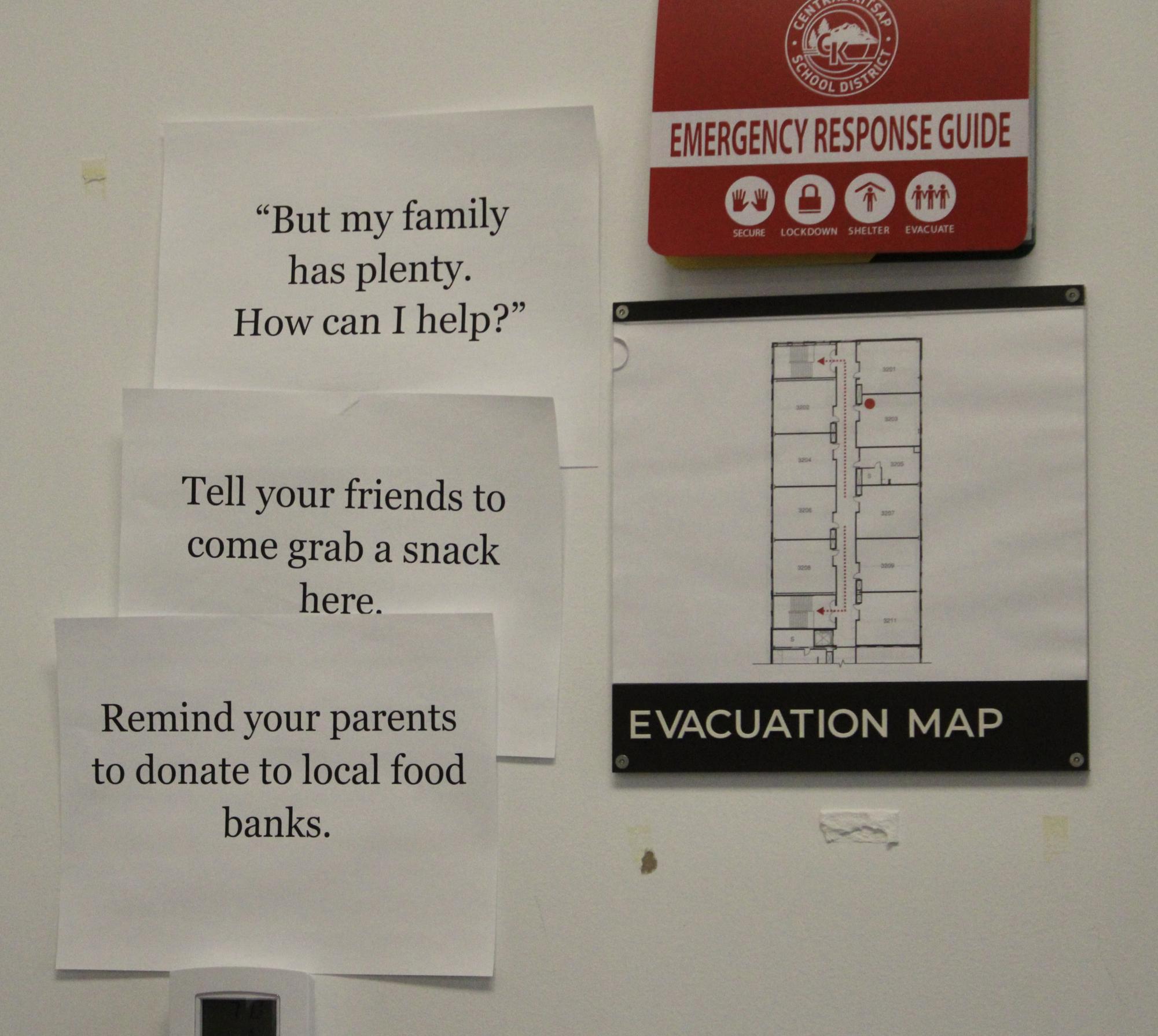
In room 3203, Szczepanski’s door is, in any case, open for anyone in need of food, no matter their academic relation or lack thereof.
“I am planning to still keep food up here on the front table in my classroom, so if people are hungry, even if they have never had me for a class, they can feel free to get something,” Szczepanski said.